By Junius Lee


You have probably heard of the fiscal deficit problem, and people making huge profits by investing in crypto. But few people would have ever linked the two. The recently passed GENIUS Act aims to address the fiscal deficit issue with a dollar-based stablecoin. By requiring that the each issued coin be backed by an equivalent volume of U.S. T-bills (short-term debt securities), the act seeks to stabilize interest rates and ease the government’s debt burden.
Traditionally, the main buyers of U.S. Treasury securities have been the Federal Reserve, foreign central banks, and U.S. commercial banks. However, changing economic conditions have weakened their demand for Treasuries in recent years. The Federal Reserve has been reducing its holdings as part of quantitative tightening. Foreign central banks have also cut back, concerned about America’s swelling debt and rising geopolitical tensions. U.S. commercial banks, constrained by regulatory requirements such as Supplementary Leverage Ratio (SLR), have little capacity to expand their Treasury holdings.
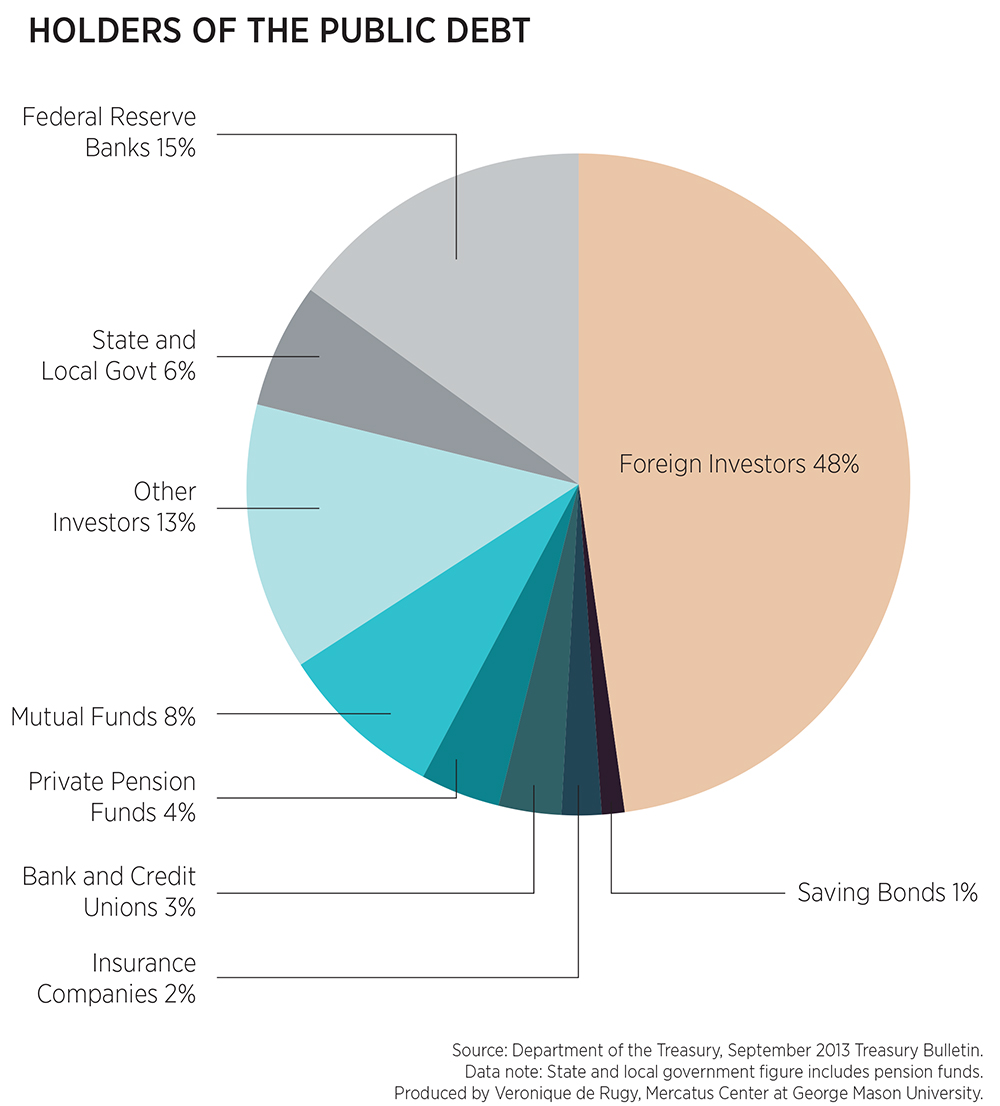
These factors have kept long-term U.S. interest rates elevated, adding pressure to the federal budget and weighing on economic growth. One example of how increased long-term interest rates affect the economy is the housing market. Treasury Secretary Scott Bessent warns that the U.S. government could soon declare a “national housing emergency” due to high interest rates.

Under the GENIUS Act, stablecoin issuers are required to back their coins with short-term U.S. Treasury securities, aiming to transform the stablecoin market into a new source of demand for U.S. government debt. Morgan Stanley projects that stablecoin issuers could hold as much as $1.2 trillion in Treasuries, potentially surpassing all major foreign sovereign holders. In response, the Treasury Department plans to adjust its issuance strategy by increasing the share of short term Treasuries while reducing long-term ones, in order to stabilize short-term rates and lower long-term yields. Secretary Bessent expects the stablecoin market to reach roughly $2 trillion and emerge as a major buyer of U.S. Treasuries, easing the nation’s fiscal burden by broadening the demand base for Treasuries.
Not everything points to a bright outlook. In my view, it remains doubtful whether the growth of the stablecoin market can keep pace with the rapid increase in the U.S. fiscal deficit. Easing SLR regulations would likely have a much greater and more certain impact on increasing demand for U.S. Treasuries.
Moreover, there is the potential risk that shocks in the crypto market could spill over into the broader national economy. Traditionally, foreign governments and institutions have purchased U.S. Treasuries for a variety of strategic and policy reasons. In contrast, private investors are primarily driven by profitability, which makes them far more sensitive to external shocks. If a disruption in the crypto market were to trigger a sharp decline in demand for short-term Treasuries, forcing the Treasury Department to roll over maturing short-term debt into longer term securities, could the bond market absorb such a shock? These are the challenges that the Trump Administration and Secretary Bessent will need to address effectively going forward.
Sources
https://www.wsj.com/finance/stablecoin-legislation-will-juice-demand-for-treasurysto-a-point-3724fad7?gaa_at=eafs&gaa_n=AWEtsqfySSAQRO98tVPxVWEfKYFdSDhOv0YAH838yaCRZIIogCpWZjaI-sikttSMhZ8%3D&gaa_ts=6990c8d8&gaa_sig=lW9qOhzVWvtgKjJdGXfBYmiowLrLbXd2zjZq-GeJ7M8N74MTE7Y7Fgc2pYCnLXc5WviwvptWjmReMUchQ_u9_w%3D%3D
https://thehill.com/homenews/administration/5481608-trump-administration-to-target-housing-costs-bessent/
https://www.bloomberg.com/news/articles/2025-06-11/bessent-says-2-trillion-reasonable-for-dollar-stablecoin-market
https://www.morganstanley.com/im/en-us/individual-investor/insights/articles/modernizing-financial-infrastructure.html