By Ishita Jha and Shriya Samanta | ShoQs 2026
Have you ever wondered why some brands lose customers when prices rise, while others gain more? For most retailers, higher prices lead to lower sales. Yet Hermès, the French luxury house behind the Birkin and Kelly bags, continues to grow even as it raises prices each year. In contrast, brands like Aritzia have seen slower growth as inflation leaves shoppers with less to spend on clothing.
This difference shows a clear divide in the fashion market. Graph 1 highlights Hermès’s steady revenue growth from 2020 to 2024, while Graph 2 shows that Aritzia’s performance is more sensitive to price changes. Inflation typically lowers demand, but Hermès relies on exclusivity and social prestige to make higher prices part of its appeal. Aritzia represents the traditional, price-sensitive model, while Hermès exemplifies a Veblen good, a product that becomes more desirable because it is expensive.
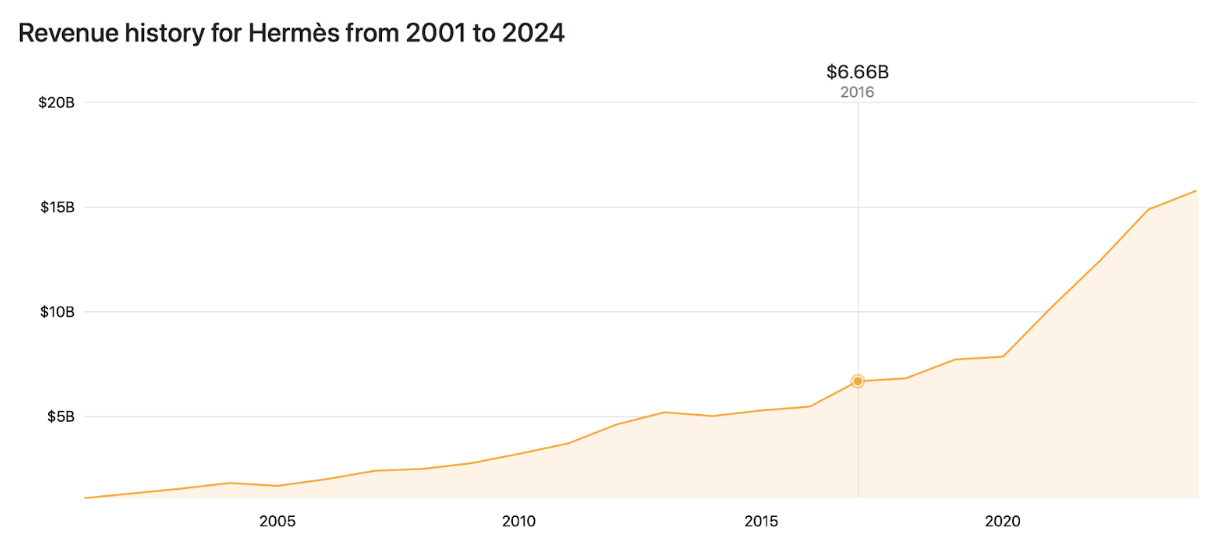
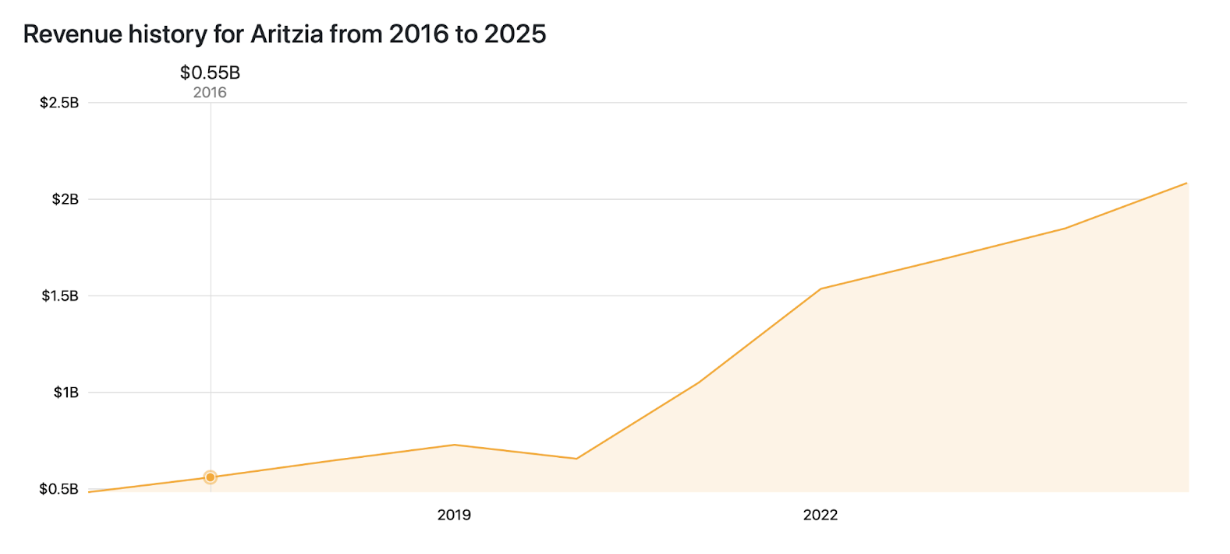
In most markets, higher prices lead to lower demand: Veblen goods are the exception. These are products whose demand increases as prices rise because higher prices signal exclusivity and status. Economist Thorstein Veblen introduced this idea in 1899, explaining that some consumers buy to display wealth rather than for utility. Hermès reflects this behavior: owning a Birkin or Kelly bag is about prestige and rarity, not function. As prices rise, the brand’s perceived value and demand often rise with them.
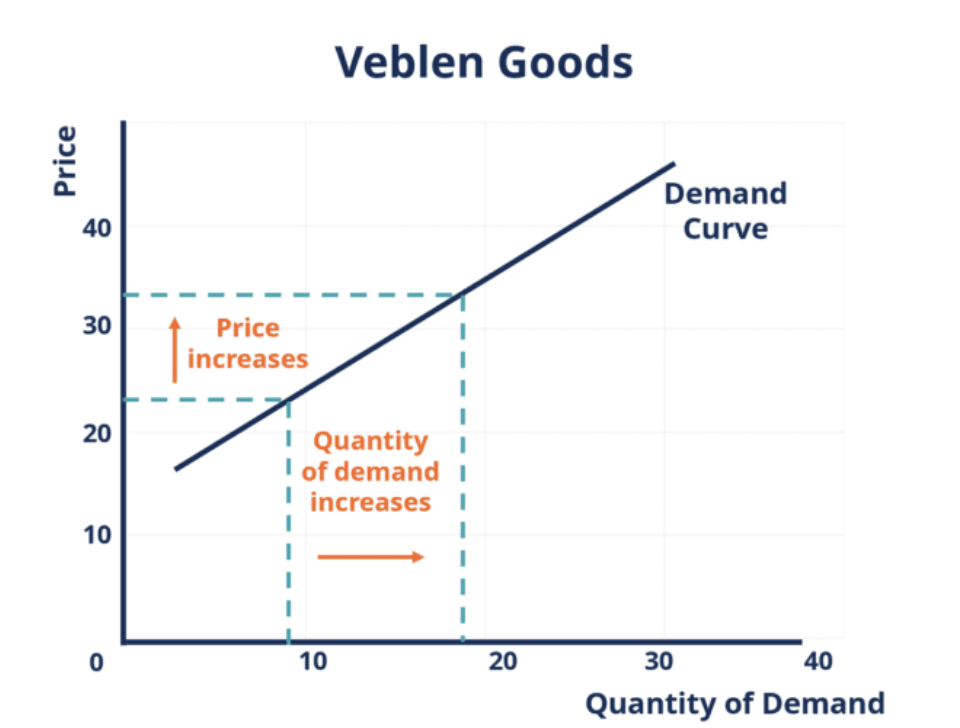
Thorstein Veblen described conspicuous consumption as buying goods to display wealth rather than to meet basic needs. This behavior is most visible in luxury fashion, where ownership signals exclusivity and success. The snob effect builds on this idea by showing how rarity increases desirability. Limited supply, high prices, and exclusivity make products more appealing to elite consumers.
Hermès’s Birkin bag system illustrates both concepts. Birkin bags are not sold openly; customers often join waitlists or must build a purchase history before qualifying to buy one. This scarcity turns the bag into a status symbol and adds to its value. As prices rise and access stays limited, demand for Hermès products often grows instead of shrinking.
The price elasticity of demand explains how much people change their buying habits when prices go up or down. Most everyday items are price elastic, which means people buy less when prices rise. Luxury goods behave differently. Many high-end products have low price elasticity because their buyers are not very sensitive to price changes. Wealthy customers can still afford these items even when prices increase. In some special cases, luxury goods show positive elasticity, which means that when prices rise, demand also rises. A higher price sends a signal of exclusivity and social prestige, which attracts more customers who want to display status. Hermès products fall into this category because rising prices enhance the brand’s image and strengthen the desire to own its items.
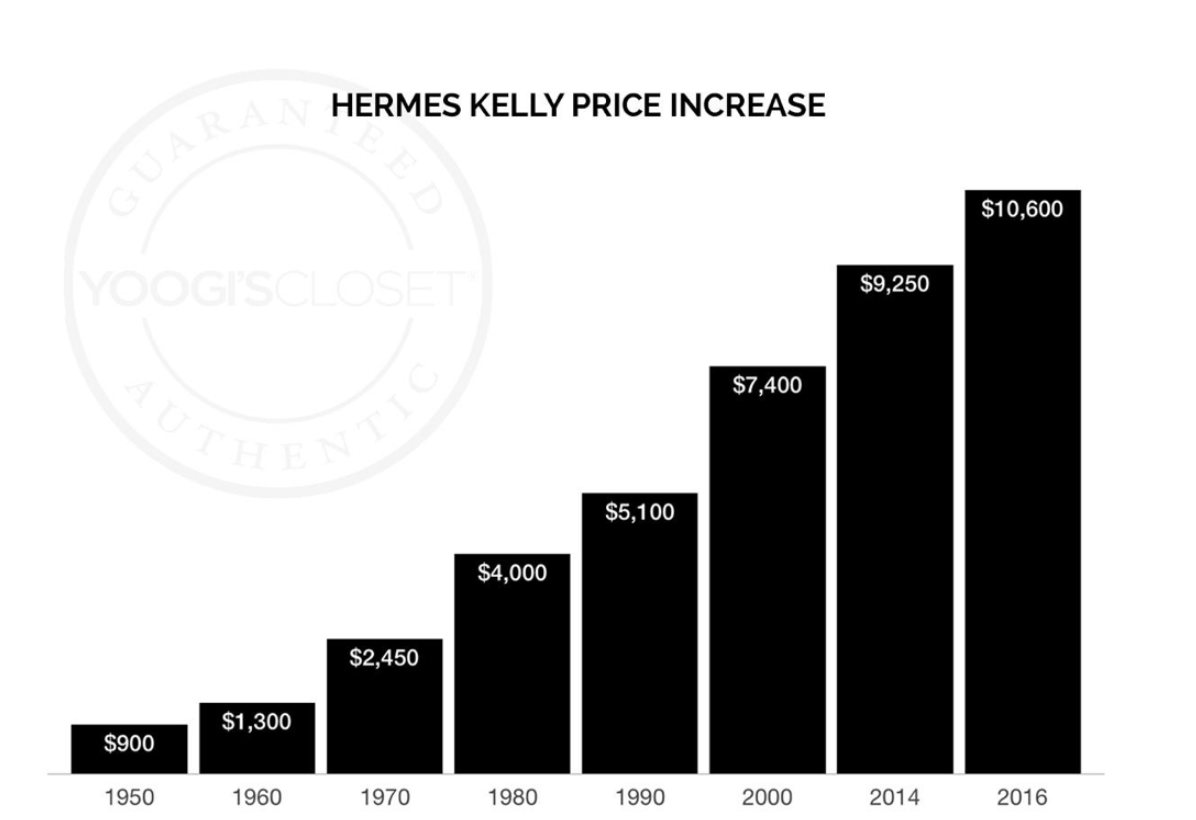
These economic ideas explain why Hermés continues to grow. Consumers not only purchase a Birkin or Kelly for utility, but also for status, rarity, and social visibility. Each price increase reinforces that sense that Hermés goods are elite and difficult to obtain, which in turn encourages demand rather than reducing it. Hermés also successfully created the idea that its bags are financial assets. Many buyers view a Birkin as an investment that can appreciate in value on the resale market. This belief reduces price sensitivity even further, because customers think of the bag not only as a luxury purchase but also as a store of value. Limited supply, rising prices, and strong brand equity work together to boost demand in a way that traditional brands cannot replicate.
Hermès thrives because it follows an economic model different from typical fashion companies. While brands like Aritzia experience weaker demand when prices rise, Hermès attracts more customers and more attention. Aritzia may raise prices by twenty to fifty dollars, which is enough to discourage many of its price-sensitive shoppers. Hermès, by contrast, raises prices by thousands of dollars, yet its demand continues to rise. By combining scarcity, prestige, and the belief that its products function as long-term investments, Hermès turns inflation into an advantage rather than a threat. As long as ownership signals status and financial value, Hermès should continue to grow even when broader consumer spending slows.
Sources
Aritzia (ATZ.TO) – Market capitalization. (n.d.). Companiesmarketcap.com. https://companiesmarketcap.com/aritzia/marketcap/
Chen, J. (2023, June 29). Veblen Good Definition. Investopedia. https://www.investopedia.com/terms/v/veblen-good.asp
Hermès (RMS.PA) – Revenue. (2024). Companiesmarketcap.com. https://companiesmarketcap.com/hermes-international/revenue
Unger, B. (2016, July 28). The secret economics of the Birkin bag. The Economist. https://www.economist.com/1843/2016/07/28/the-secret-economics-of-the-birkin-bag
Zhu, G., Zhang, J., Xing, E., & Han, D. (2022). Pricing and quality decisions with conspicuous consumers. Transportation Research Part E: Logistics and Transportation Review, 165, 102857. https://doi.org/10.1016/j.tre.2022.102857