The Rise of Sports Gambling and its Effect on Casinos
By Gabriel Pirlot, Akshaj Kumar, Raja Chinnakotla | ShoQs 2026
Introduction
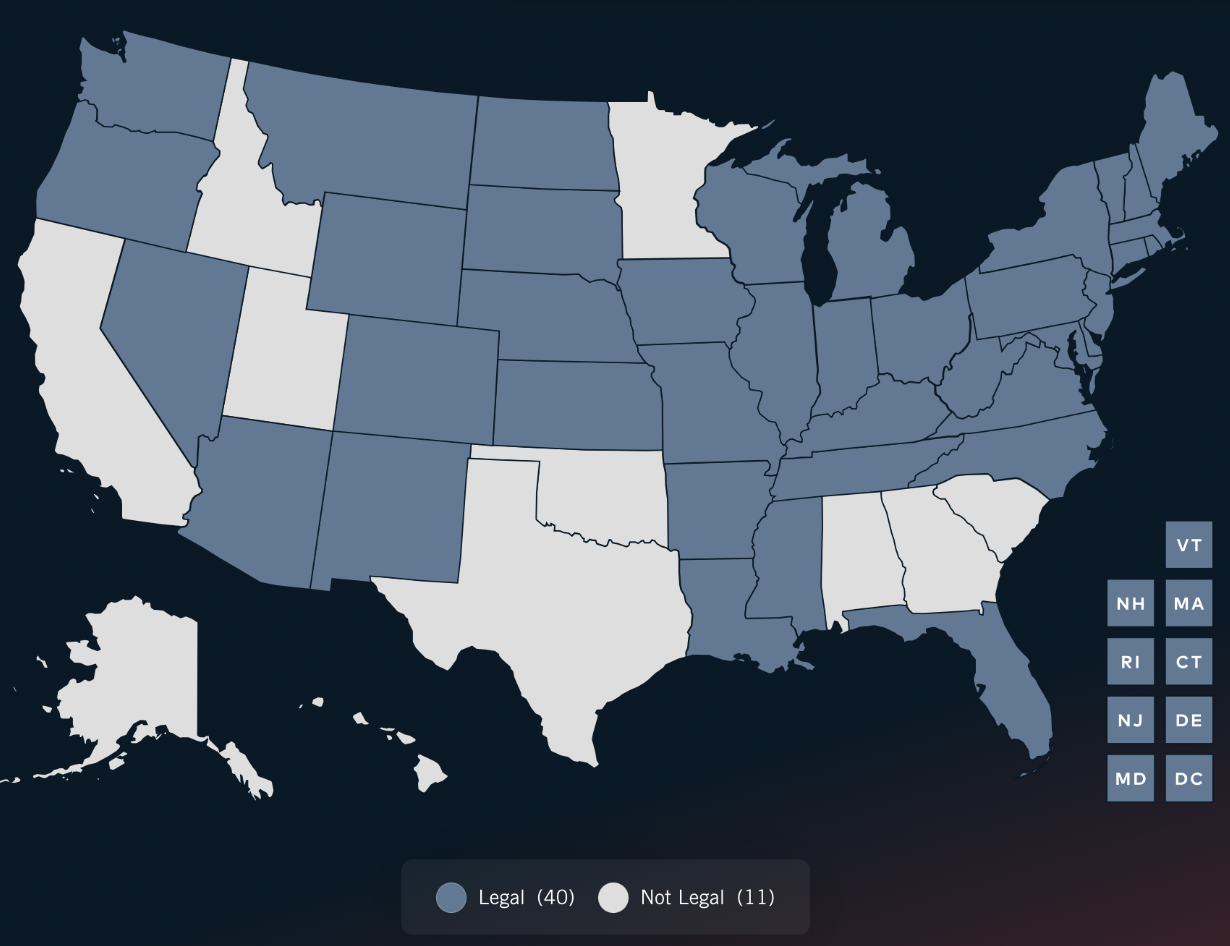
Over the past decade, digital sports viewership has surged 466%, from 18.6 million in 2018 to over 105 million in 2025. This increase in viewership isn’t just beneficial for sporting leagues: it’s also transforming the niche market of sports betting into a mainstream industry. Technological advances, cultural acceptance, and the 2018 Supreme Court ruling in Murphy v. NCAA, which allowed states to legalize and regulate sports wagering, has opened the door to billions in potential revenue. The rise of sports betting has shifted where and how people gamble. Rather than eroding casino profits, it’s redefining them and illustrating how industries can adapt when innovation changes consumer behavior.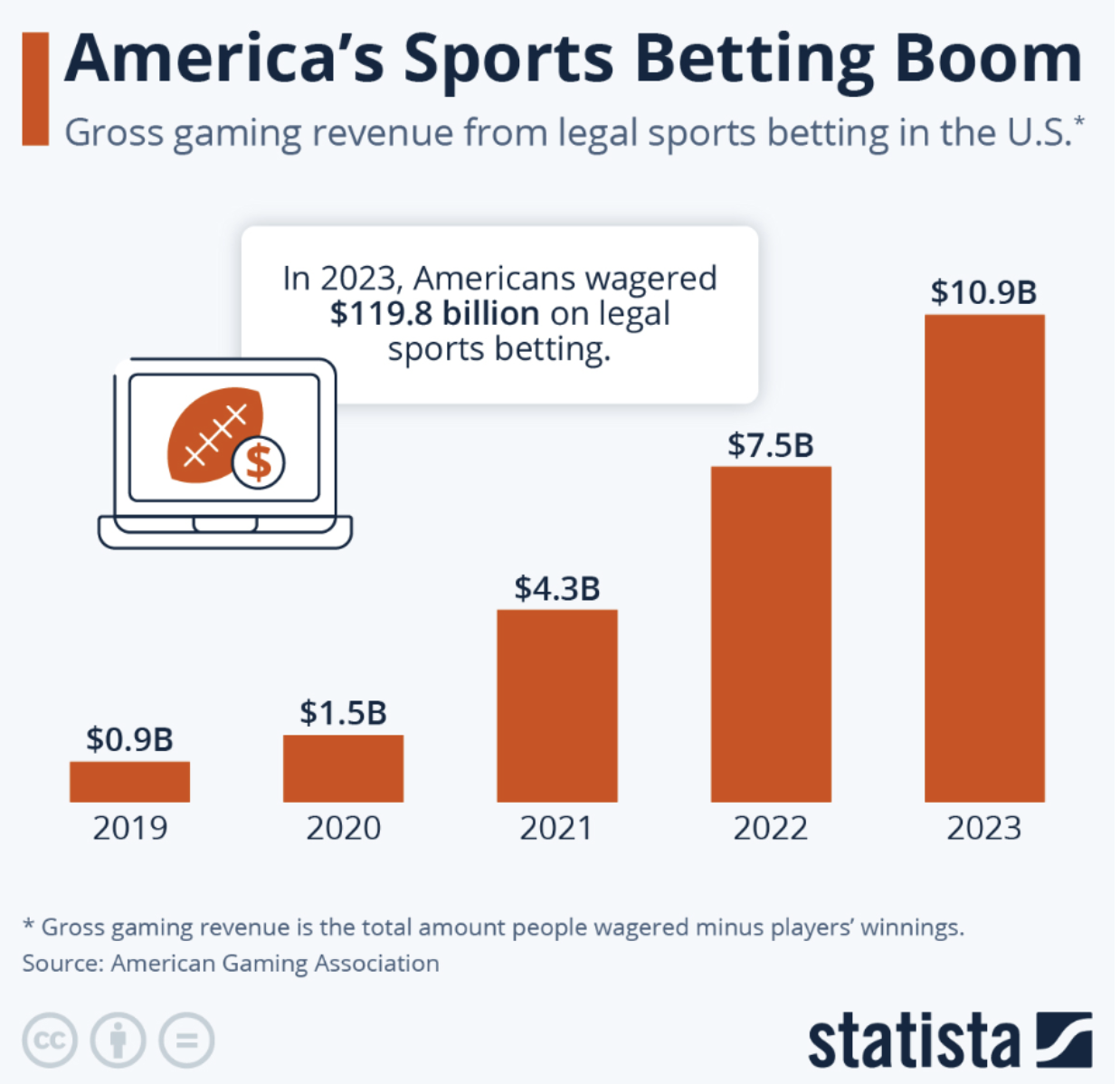 Misconceptions
Initially, sports betting eroded traditional casino revenue. For example, when Massachusetts introduced legalized sports betting in 2024, casinos’ reported revenue dropped by 0.9% – the first year-on-year decline in Massachusetts history. Online and mobile gambling further diverted customers’ money from table games and slots by allowing consumers to bet without ever entering a casino. This drop in profit didn’t spell the end for casinos, however. Being profit-driven, casinos were able to adapt, integrating the seeming competition into a new revenue stream.
Implementation
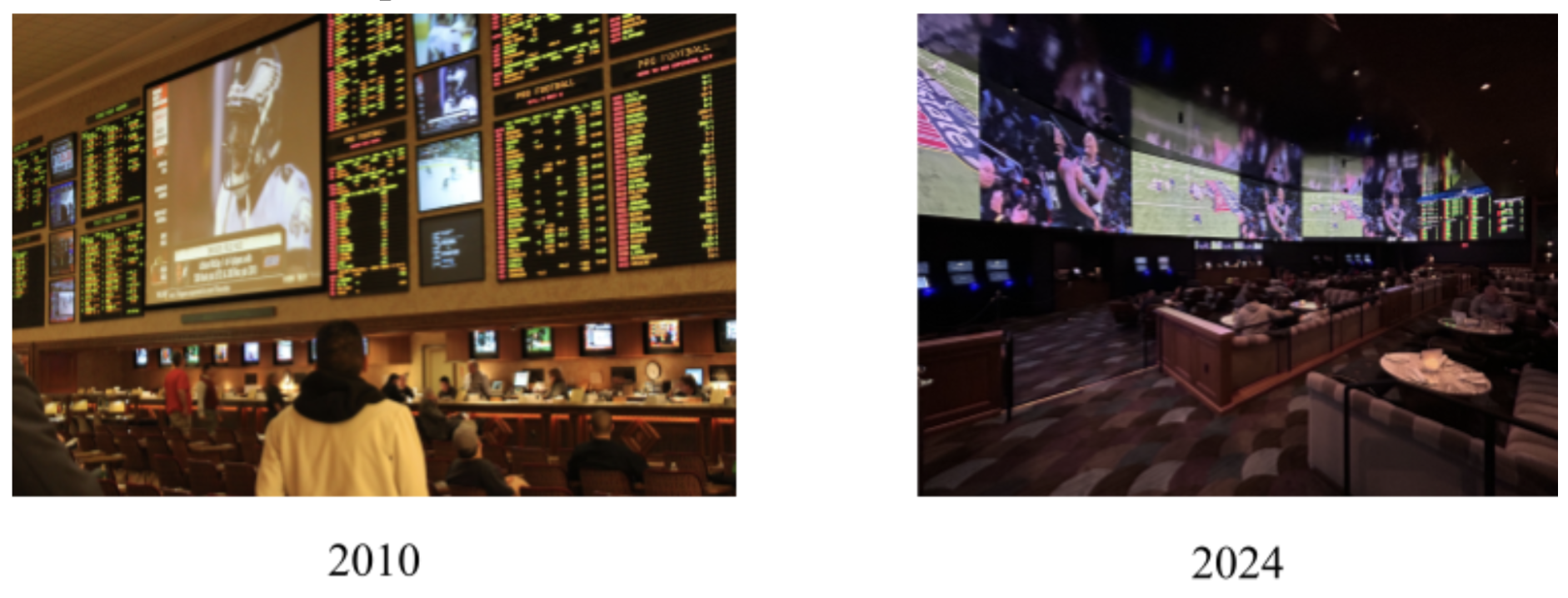
As sports betting has risen in popularity, casinos are implementing more physical infrastructure to sportsbooks. In the past sportsbooks were old, dingey, smoke filled rooms that rarely attracted a younger audience. Now, casinos are providing dozens of flat screen TVs, bar services, and improved dining options that are becoming more and more attractive for the masses. For instance, Circa Casino and Resort spent over 40 million dollars renovating their sports rooms to include floor to ceiling TVs and movie theatre speakers. This highlights how casinos see sports betting as a worthwhile investment and are betting that this type of long-term capital investment will turn profits for the future.
Misconceptions
Initially, sports betting eroded traditional casino revenue. For example, when Massachusetts introduced legalized sports betting in 2024, casinos’ reported revenue dropped by 0.9% – the first year-on-year decline in Massachusetts history. Online and mobile gambling further diverted customers’ money from table games and slots by allowing consumers to bet without ever entering a casino. This drop in profit didn’t spell the end for casinos, however. Being profit-driven, casinos were able to adapt, integrating the seeming competition into a new revenue stream.
Implementation
As sports betting has risen in popularity, casinos are implementing more physical infrastructure to sportsbooks. In the past sportsbooks were old, dingey, smoke filled rooms that rarely attracted a younger audience. Now, casinos are providing dozens of flat screen TVs, bar services, and improved dining options that are becoming more and more attractive for the masses. For instance, Circa Casino and Resort spent over 40 million dollars renovating their sports rooms to include floor to ceiling TVs and movie theatre speakers. This highlights how casinos see sports betting as a worthwhile investment and are betting that this type of long-term capital investment will turn profits for the future.
 However, casinos aren’t stopping at physical improvements to sports betting infrastructure. Many casino corporations are hedging for their own sports betting apps. For context, there is already oligopolistic competition in the Vegas strip – over 50% of the casinos are owned by 2 companies, Caesars Entertainment and MGM. Now, there is reduced competition in the sports-betting market. Both companies have been hitting hard to make sports betting profitable for their business. For one, they have been building their own sports betting apps to compete with other competitors in the sports betting market.
In a 2024 earnings report, MGM’s sports-betting app BETMGM had a net revenue of over $1 billion, a 6% increase from the same period one year prior. Casinos are directly competing with firms to capitalize on the growing marketplace. Moreover, the companies have been acquiring firms, mainly technology companies, in order to improve their position in an increasingly digitized marketplace. For Caesars, they continued their quest on cornering the gambling market by acquiring Zeroflucs, an Australian technology company that specializes in sports betting data and technology. This allows them to stop outsourcing their work, since they don’t have to pay another company for the costly services. More importantly, they will have increased access to gambling data, ensuring they have better odds and create bets that are beneficial to the house. Thereby, increasing player base while reducing buyouts. Through these integration methods, casinos are better leveraging sports betting as a means for business success.
Revenue Shift
The data indicates that the casinos’ capital investments are paying off. A study of casino revenue data found that the introduction of onsite sports betting is generally associated with higher casino revenues and can give casinos competitive advantages over others which either fail to implement sports gambling or are located in nearby states where the practice is still illegal. The volume of online sports betting, however, has a negative relationship with revenues. This is likely because online bets can be placed anywhere in the state and can take the place of a trip to the casino. Nonetheless, casinos stand to benefit from implementing onsite sports betting, as it creates a competitive advantage and attracts new customers who gamble on both sports games and traditional slot or table games. In theory, there would be a certain amount of intra-casino cannibalization, where customers merely shift their demand from traditional games to sports betting: this would result in no change to revenue. Instead, the data from these states indicates that this effect is outweighed by the attraction of new customers and inter-casino cannibalization. Despite the negative perceptions of sports betting, the numbers don’t lie. The increased revenue shift demonstrates the growth of this industry.
However, casinos aren’t stopping at physical improvements to sports betting infrastructure. Many casino corporations are hedging for their own sports betting apps. For context, there is already oligopolistic competition in the Vegas strip – over 50% of the casinos are owned by 2 companies, Caesars Entertainment and MGM. Now, there is reduced competition in the sports-betting market. Both companies have been hitting hard to make sports betting profitable for their business. For one, they have been building their own sports betting apps to compete with other competitors in the sports betting market.
In a 2024 earnings report, MGM’s sports-betting app BETMGM had a net revenue of over $1 billion, a 6% increase from the same period one year prior. Casinos are directly competing with firms to capitalize on the growing marketplace. Moreover, the companies have been acquiring firms, mainly technology companies, in order to improve their position in an increasingly digitized marketplace. For Caesars, they continued their quest on cornering the gambling market by acquiring Zeroflucs, an Australian technology company that specializes in sports betting data and technology. This allows them to stop outsourcing their work, since they don’t have to pay another company for the costly services. More importantly, they will have increased access to gambling data, ensuring they have better odds and create bets that are beneficial to the house. Thereby, increasing player base while reducing buyouts. Through these integration methods, casinos are better leveraging sports betting as a means for business success.
Revenue Shift
The data indicates that the casinos’ capital investments are paying off. A study of casino revenue data found that the introduction of onsite sports betting is generally associated with higher casino revenues and can give casinos competitive advantages over others which either fail to implement sports gambling or are located in nearby states where the practice is still illegal. The volume of online sports betting, however, has a negative relationship with revenues. This is likely because online bets can be placed anywhere in the state and can take the place of a trip to the casino. Nonetheless, casinos stand to benefit from implementing onsite sports betting, as it creates a competitive advantage and attracts new customers who gamble on both sports games and traditional slot or table games. In theory, there would be a certain amount of intra-casino cannibalization, where customers merely shift their demand from traditional games to sports betting: this would result in no change to revenue. Instead, the data from these states indicates that this effect is outweighed by the attraction of new customers and inter-casino cannibalization. Despite the negative perceptions of sports betting, the numbers don’t lie. The increased revenue shift demonstrates the growth of this industry.
 Conclusion
As gambling options continue to expand beyond traditional slot and table games, where will casinos look next to generate profits? Despite competition from the mobile sports gaming industry, casinos have adapted by investing in physical sportsbooks and even branching into the tech industry. For now, the real evidence shows that there is no slowing down these casinos in finding their next big profit. The legalization of sports betting is truly a Royal Flush for the casino industry: casinos in these states are pressured to innovate for the better.
Conclusion
As gambling options continue to expand beyond traditional slot and table games, where will casinos look next to generate profits? Despite competition from the mobile sports gaming industry, casinos have adapted by investing in physical sportsbooks and even branching into the tech industry. For now, the real evidence shows that there is no slowing down these casinos in finding their next big profit. The legalization of sports betting is truly a Royal Flush for the casino industry: casinos in these states are pressured to innovate for the better.
Sources https://massgaming.com/wp-content/uploads/SB-Economic-Impact-Report_07.03.25_final.pdf https://archive.ph/4vLcs https://investors.mgmresorts.com/investors/news-releases/press-release-details/2024/BETMGM-FIRST-HALF-2024-UPDATE/default.aspx https://investor.caesars.com/news-releases/news-release-details/caesars-entertainment-acquires-sports-betting-technology-company https://www.nytimes.com/2025/09/30/business/live-in-game-sports-betting.html https://ssrn.com/abstract=4659440 http://dx.doi.org/10.2139/ssrn.4659440 https://www.americangaming.org/research/state-of-play-map/
Misconceptions
Initially, sports betting eroded traditional casino revenue. For example, when Massachusetts introduced legalized sports betting in 2024, casinos’ reported revenue dropped by 0.9% – the first year-on-year decline in Massachusetts history. Online and mobile gambling further diverted customers’ money from table games and slots by allowing consumers to bet without ever entering a casino. This drop in profit didn’t spell the end for casinos, however. Being profit-driven, casinos were able to adapt, integrating the seeming competition into a new revenue stream.
Implementation
As sports betting has risen in popularity, casinos are implementing more physical infrastructure to sportsbooks. In the past sportsbooks were old, dingey, smoke filled rooms that rarely attracted a younger audience. Now, casinos are providing dozens of flat screen TVs, bar services, and improved dining options that are becoming more and more attractive for the masses. For instance, Circa Casino and Resort spent over 40 million dollars renovating their sports rooms to include floor to ceiling TVs and movie theatre speakers. This highlights how casinos see sports betting as a worthwhile investment and are betting that this type of long-term capital investment will turn profits for the future.
However, casinos aren’t stopping at physical improvements to sports betting infrastructure. Many casino corporations are hedging for their own sports betting apps. For context, there is already oligopolistic competition in the Vegas strip – over 50% of the casinos are owned by 2 companies, Caesars Entertainment and MGM. Now, there is reduced competition in the sports-betting market. Both companies have been hitting hard to make sports betting profitable for their business. For one, they have been building their own sports betting apps to compete with other competitors in the sports betting market.
In a 2024 earnings report, MGM’s sports-betting app BETMGM had a net revenue of over $1 billion, a 6% increase from the same period one year prior. Casinos are directly competing with firms to capitalize on the growing marketplace. Moreover, the companies have been acquiring firms, mainly technology companies, in order to improve their position in an increasingly digitized marketplace. For Caesars, they continued their quest on cornering the gambling market by acquiring Zeroflucs, an Australian technology company that specializes in sports betting data and technology. This allows them to stop outsourcing their work, since they don’t have to pay another company for the costly services. More importantly, they will have increased access to gambling data, ensuring they have better odds and create bets that are beneficial to the house. Thereby, increasing player base while reducing buyouts. Through these integration methods, casinos are better leveraging sports betting as a means for business success.
Revenue Shift
The data indicates that the casinos’ capital investments are paying off. A study of casino revenue data found that the introduction of onsite sports betting is generally associated with higher casino revenues and can give casinos competitive advantages over others which either fail to implement sports gambling or are located in nearby states where the practice is still illegal. The volume of online sports betting, however, has a negative relationship with revenues. This is likely because online bets can be placed anywhere in the state and can take the place of a trip to the casino. Nonetheless, casinos stand to benefit from implementing onsite sports betting, as it creates a competitive advantage and attracts new customers who gamble on both sports games and traditional slot or table games. In theory, there would be a certain amount of intra-casino cannibalization, where customers merely shift their demand from traditional games to sports betting: this would result in no change to revenue. Instead, the data from these states indicates that this effect is outweighed by the attraction of new customers and inter-casino cannibalization. Despite the negative perceptions of sports betting, the numbers don’t lie. The increased revenue shift demonstrates the growth of this industry.
Conclusion
As gambling options continue to expand beyond traditional slot and table games, where will casinos look next to generate profits? Despite competition from the mobile sports gaming industry, casinos have adapted by investing in physical sportsbooks and even branching into the tech industry. For now, the real evidence shows that there is no slowing down these casinos in finding their next big profit. The legalization of sports betting is truly a Royal Flush for the casino industry: casinos in these states are pressured to innovate for the better.
Sources https://massgaming.com/wp-content/uploads/SB-Economic-Impact-Report_07.03.25_final.pdf https://archive.ph/4vLcs https://investors.mgmresorts.com/investors/news-releases/press-release-details/2024/BETMGM-FIRST-HALF-2024-UPDATE/default.aspx https://investor.caesars.com/news-releases/news-release-details/caesars-entertainment-acquires-sports-betting-technology-company https://www.nytimes.com/2025/09/30/business/live-in-game-sports-betting.html https://ssrn.com/abstract=4659440 http://dx.doi.org/10.2139/ssrn.4659440 https://www.americangaming.org/research/state-of-play-map/